60 Minutes, Two Chores, One Live Prototype
Today (Sunday) I had a drive to Prescott, Wisconsin, and clean a deck that needed power washing. Both were unavoidable. I wanted to turn that commute & washer time into productive time.
Sixty minutes in the car
In the car, no laptop, I talked through a product idea with Claude in voice mode. I had 60 minutes.
I love maps. Always have. Maps help me understand complicated data more easily. In just talking with Claude in voice (brainstorming) mode, I landed on an idea: An ambient, real-time map of the Minneapolis/St. Paul area.
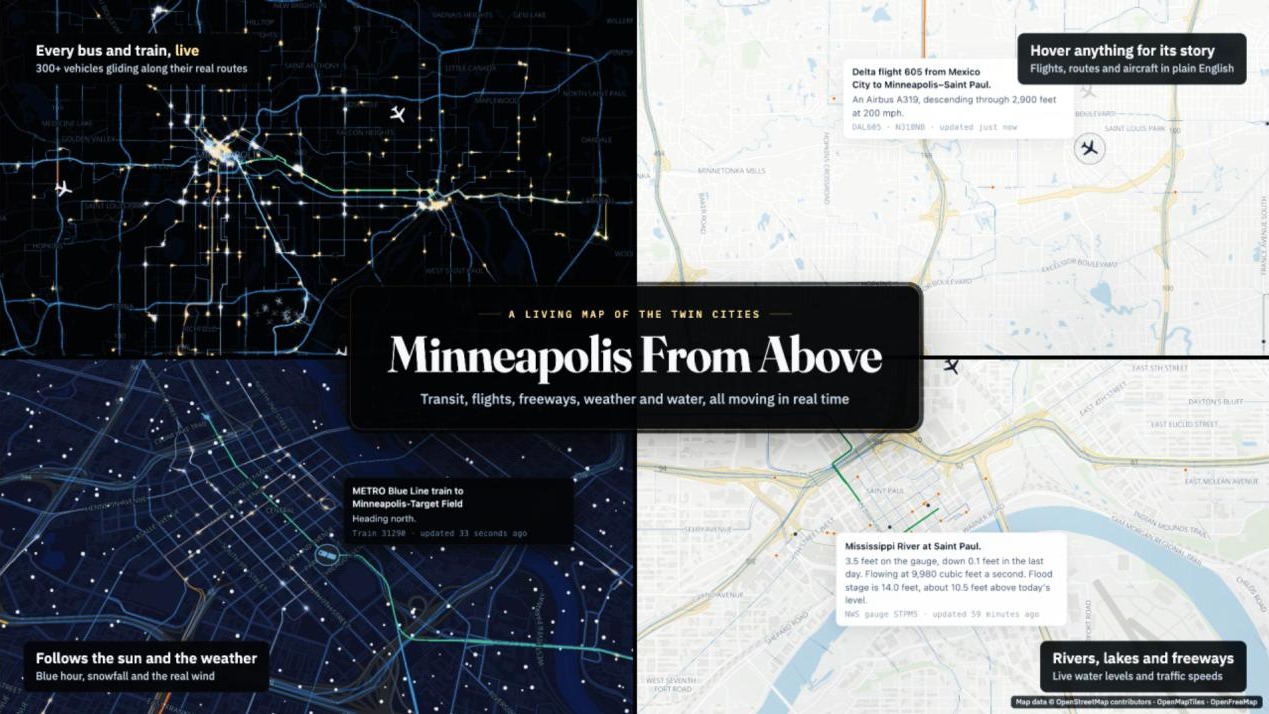
Not just any map - this map would breathe. Buses and trains moving along their actual routes. Planes crossing overhead - even satellites. Wind and weather moving across the map like they move across the sky. The user experience is passive - it's like looking at the city as it operates normally. All powered by free APIs mashed up from around the web.
From brief to build
By the time I arrived, the idea was scoped. Data sources picked. Deployment target picked. I copied the brief from Chat and pasted into Code. Claude created all the stories, prioritized what it thought was the best way. I sandboxed the permissions and iterations so that any story would need to be tested by Claude. If the tests passed, commit to Github and move on to the next story.
Then I power washed a deck. In the background, Claude Code built it.
The live prototype
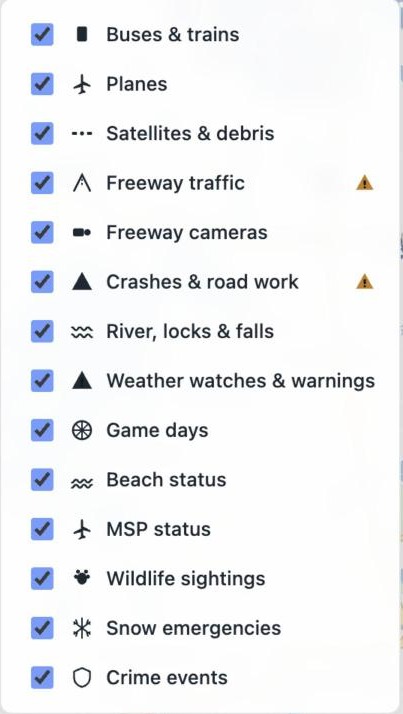
Here it is - a live prototype: https://minneapolis-from-above.pages.dev/. The map just sits there. You don't need to click anything. The city updates around you, buses crawling their routes, weather moving through, and you watch it the way you'd watch a fish tank, not a dashboard. If you're curious, you can zoom in. Hover on items to see more. You can hover on bodies of water where levels are reported. The wind wisps by - more public data. :) If it snows, rains, etc. the screen shows that too. It's a passive experience that just updates as the city breathes.
What it says about the job
I'm a technical product person. What I do is scope problems precisely enough that execution becomes fast, whether the executor is an engineering team or an AI agent. That's the same skill either way. AI just collapsed the time between having the idea and seeing if it's viable.
The part that took the longest was the drive. Seriously!
First published on LinkedIn, September 26, 2026.